
There are few things I like to do more than argue about the fine gradations of Who Is A Star Today And Why. I love the categorization element (what's the difference between a heartthrob and a sex symbol??) but I especially love thinking about what the actors we designate as heartthrobs tell us about our current understandings of masculinity. Is Pedro Pascal a heartthrob or a boyfriend? Is Leonardo DiCaprio the Eternal Heartthrob? Are the stars of Heated Rivalry the Official Heartthrobs of 2026? Do our heartthrobs age with us, or are they eternally 22? Romance author and male celeb aficionado Adib Khorram joins me to work through all of the above and so much more.
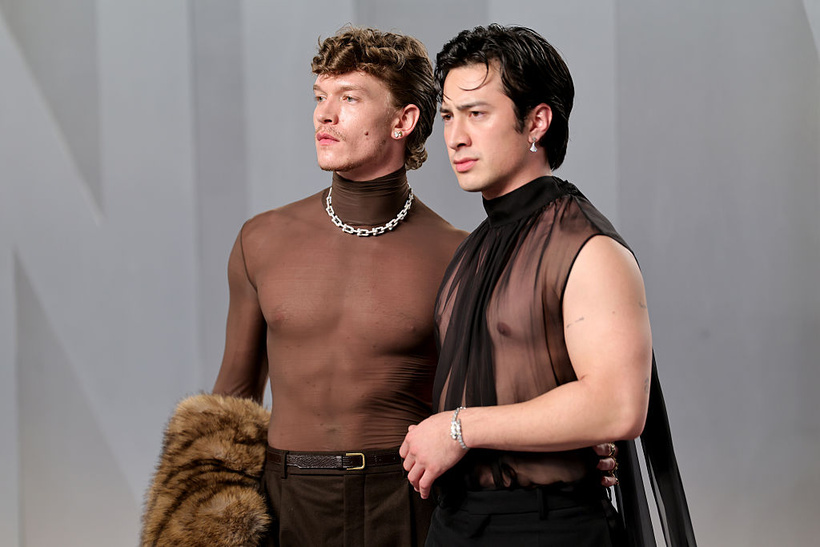
Connor Storrie and Hudson Williams at the Vanity Fair Oscar Party (via Getty)
Anne Helen Petersen: Hey everyone. Just wanted to let you know about some of the episodes we're working on so that you can submit your questions. So the first is all about convenience culture. We're talking about self-checkouts, delivery apps, music streaming that allows you to listen to literally any song at any time, news and media. What does the evolution and prioritization of convenience say about our society, and what does it cost us? Send us your questions.
We're also doing an episode about the women's fitness industrial complex, so whether it's, like, the call to eat protein all the time or, I guess, fiber all the time, or lifting heavy or doing Pilates, there are all these exercise trends targeted specifically towards women. What have you seen? What are you curious about? What do you like? What's weird? Take that in any direction.
And then we're also working on a handful of episodes with different guests who talk about clothes and personal style. This is sort of pegged to back to school, which is always when I get a little excited about thinking about clothes. I don't know, I'm just, like, a 13-year-old girl at heart. But we'll be talking about thrifting, about plus size options or lack thereof, about defining one's personal style and if that's even a thing that matters, and about why some clothing items go viral. So keep an eye on clothes culture around you and let us know what sparks your interest.
And of course, we always need fodder for the Ask Anne Anything. You can submit everything at tinyurl.com/culturestudypod. Okay, thanks. Enjoy today's show.
This is the Culture Study Podcast, and I'm Anne Helen Petersen.
Adib Khorram: And I'm male gaze expert Adib Khorram.
Anne Helen Petersen: I love that because it goes in two ways. Male gaze, male gays.
Adib Khorram: Yes, exactly.
Anne Helen Petersen: Okay, we're gonna start controversial. Who is the first heartthrob that you remember being aware of? I think this is different than your first heartthrob, the first person that you were aware of, that you understood as a heartthrob.
Adib Khorram: Ooh... Boy, this is gonna date me. I remember there was this show called seaQuest DSV, and everyone -
Anne Helen Petersen: Oh, 100%.
Adib Khorram: - was talking about Jonathan Brandis, and then he went and did, like, a weird Chuck Norris karate movie. And then he died way too young. But the middle part, those big, expressive eyes, that's what I remember everyone in the fifth grade recess talking about.
Anne Helen Petersen: So actually, this gives us a chance to talk about, to come up with our working definition of heartthrob, because one of our listeners, Heidi, asked what's the difference between a heartthrob and a sex symbol, or I also feel like crush or teen idol is also an interesting variation of all of these, because to me, Jonathan Brandis is a teen idol.
Adib Khorram: Interesting. I would agree he is a teen idol. But when I was a preteen, then he was also a heartthrob. I think relative age does play into it.
Anne Helen Petersen: Totally. Yes.
Adib Khorram: And I think specifically when I think about the difference between a heartthrob and a sex symbol, I think heartthrob is an ephemeral status.
Anne Helen Petersen: Yes.
Adib Khorram: And sex symbol is like a sort of permanent bestowal.
Anne Helen Petersen: Yes.
Adib Khorram: Like Sean Connery was a sex symbol. Sean Connery still is a sex symbol posthumously. But he was only a heartthrob for a portion of his life, but he was a sex symbol past when he stopped being a heartthrob. To me, that makes sense.
Anne Helen Petersen: Yes, absolutely. And I also think that the age component is really interesting, because I think it works both in terms of a heartthrob can be - when you're a certain age, it needs to be someone who's older than you, and also when you're a certain age, it needs to be someone who's younger than you.
So its positionality is figured into this, and we'll... Like, we got a lot of listener questions about ‘where did the heartthrobs go,’ and I'm like, "They didn't go anywhere. You're just 44." [Laughter] But my earliest heartthrob, I think would be, and this is kind of toeing the line of sex symbol, that I was aware of, was Patrick Swayze.
Adib Khorram: Mm.
Anne Helen Petersen: And part of it was that I was not allowed to watch Dirty Dancing. So he was just imbued with this mystery of everyone says this person is the hottest and that made him seem like someone who I should think is hot even if I didn't per- like, he's not my flavor.
Adib Khorram: I think that's absolutely accurate. I think sort of the cultural milieu affects who is heartthrobs, and there is pressure to see the same people as heartthrobs.
Anne Helen Petersen: Yes.
Adib Khorram: I think in some ways it feels like one of the last pieces of monoculture out there is who we all have decided is a heartthrob. That and The Pitt. That's it for monoculture. [Laughter]
Everything else is completely fragmented, but everyone loves heartthrobs and The Pitt.
Anne Helen Petersen: Yes. We could just do this whole episode you and I talking about who we think is hot.
Adib Khorram: We could, and perhaps I would argue even should. What else do the people want?
Anne Helen Petersen: But we also have to go deeper because this is Culture Study.
So we talk a lot about female beauty standards, and I actually think we've been talking a lot more about the punishing, exacting form of male beauty standards. But what do you think our current designation is for a heartthrob?
Adib Khorram: Ooh. I think current designation for a heartthrob is a conventionally attractive man.
Anne Helen Petersen: Yes.
Adib Khorram: I think they have to be an actor. I feel like I never hear it, even the most beautiful of musicians or athletes described as heartthrobs. I think they have to be an actor.
Anne Helen Petersen: Yes. Yes, yes, yes. Yeah. That's a good point.
Adib Khorram: And I think they are someone that is conventionally attractive, and with enough mystique that they are almost - I hope I'm using this word right - a shibboleth for the audiences to put their own desires onto.
And so they have to have an aura of availability even though we all know that they are in fact not available to us.
Anne Helen Petersen: Two points here. I think that the point about musicians is so strong because I think that a musician is only ever who they appear to be, like their image is themselves. There isn't disappearing into a role and then there's some true self that we're allowed to imagine, like who they are in real life.
So, Harry Styles to me is a quintessential teen idol because Harry Styles is always Harry Styles. Like, there isn't any…
Adib Khorram: Even when he acts, he's still just Harry Styles in a costume.
Anne Helen Petersen: Yeah. When, well, and also, ‘acts.’
Adib Khorram: I know, right? He stood where they told him to stand and said the words that were written down for him in a script.
Anne Helen Petersen: Totally. And then a star, though, can have that mystique that I think is central to the heartthrob. And even Melody was joking about how she wrote heartthrob in the preparation for this episode way too many times and, started thinking about it as a medical condition. Like, if we're thinking, like the actual word, heartthrob, it's like you can't control the thing that your body does when you see this person.
Adib Khorram: Yeah, like a physical response.
Anne Helen Petersen: But it's not sexual, right? It's not necessarily, right? It's more emotional. It's a more… connection that has less to do with straight sexual desire, and I don't mean that straight heterosexual, I mean pure desire and more to do with an emotional desire. I think.
Adib Khorram: I think so, and I think it taps into, this is gonna sound weird, a desire a lot of us have to know the trappings of fame.
Anne Helen Petersen: Yes.
Adib Khorram: Yes. To be seen and beloved by the masses.
Anne Helen Petersen: So I recently read Emma Straub's book, American Fantasy, which is about going on a New Kids on the Block cruise. Have you read it?
Adib Khorram: I have it on my cart back there, which is overflowing with books that I will definitely get around to reading someday.
Anne Helen Petersen: It is such a romp, but one of the things I really liked about it is that it channels that desire to actually... That you had when you were a kid where you're like, if Joey McIntyre would just talk to me, like if we could just spend a couple hours together, we would see the true connection that we had, and -
Adib Khorram: That's true.
Anne Helen Petersen: - be friends, and maybe future lovers, like whatever. But it's more about that desire to see the emotional connection play out, and less about like I wanna hump his brains out or something like that.
Adib Khorram: Yeah. I think heartthrobs can't exist without parasocial relationships.
Anne Helen Petersen: Yes.
Adib Khorram: If it’s possible to know them, then they stop being a heartthrob.
Anne Helen Petersen: Yes. What about... I think this is really interesting now, especially with more and more stars being very openly out. Do you think that they have to be open to both the male and female gaze, like a subject to both the male and female gaze?
Adib Khorram: I actually think it helps them if they manage to live in both gazes.
Anne Helen Petersen: Yes.
Adib Khorram: I think Jonathan Bailey is… like, he got to be People's sexiest man alive -
Anne Helen Petersen: Mm-hmm.
Adib Khorram: - was one of the first people to make waves with their slutty little glasses, and he is an out gay man, and people of all genders love him.
Anne Helen Petersen: Yes.
Adib Khorram: And I think the stars of Heated Rivalry have managed to move in such a way that they have welcomed in fans and admirers and heartthrobbees... heartthrobbers, however we would say that. Like, they have welcomed that in by playing with gender expectations.
Anne Helen Petersen: I think that George Clooney is in this category, even though he also, I think at various points has been a sex symbol, but he has also very explicitly been like, "I don't care if people desire me in that way. Like, whatever. Like, how does it change my life if people want to imagine me in that way?"
We have a question that's gonna set us up to another important wrinkle in this story. This comes from Kate.
Kate: "Is heartthrob a gendered term? Even though I myself am queer, the term heartthrob makes me think of man. Are there heartthrobs who are women or femmes?"
Anne Helen Petersen: Great question.
Adib Khorram: I agree, and I hate gender essentialism, which is why I'm worried that my answer, I think, is yes. I have only ever heard heartthrob applied to a man.
I am also extremely homosexual, and when I think of the most beautiful women in the world, I still don't think they're a heartthrob. I think that would be my exception, or please step on me, Cate Blanchett, in your full Galadriel costume. Like, that's what I think.
But I don't think heartthrob.
Anne Helen Petersen: Right. Yeah. Well, and somebody like Tilda Swinton, like women who are playing with androgyny... I think that they're sex symbols, not heartthrobs.
Adib Khorram: Mm-hmm.
Anne Helen Petersen: Because there is a charisma to their gender play, but it's a hard charisma, right?
Adib Khorram: Agreed. And I also think when we think of how women are expected to operate through their celebrity, I think there is an expectation of sweetness. Like, you're supposed to be America's sweetheart, not a heartthrob if you're more femme aligned.
Anne Helen Petersen: Yes.
Adib Khorram: I feel like male heartthrobs are allowed to sort of play with their sexuality, but if a beautiful woman starts to do that, she's immediately slut shamed.
Anne Helen Petersen: Next question comes from Jenna, and it's gonna allow me to get wonky classic Hollywood. I'm very excited. Okay. It's about the evolution of the heartthrob.
Jenna: How do you think the idea of a quote, unquote, "heartthrob" has evolved from the late '90s and early 2000s, shout out to my formative crush, Jonathan Taylor Thomas, and that era of younger, more boyish, less fully formed celebrity crushes to today's version, like Pedro Pascal, who feels more mature, self-aware, and aligned with things like authenticity, emotional intelligence, and even feminist values?
Is this shift a kind of generational reaction against the heartthrobs we grew up with, or just a reflection of how millennials themselves have aged and what we now find attractive? And more broadly, do younger generations even use the term heartthrob, or is this a millennial driven lens that says more about us than about the celebrities themselves?
Anne Helen Petersen: What's your first reaction here?
Adib Khorram: My first reaction is everything always says more about ourselves than it does about the world around us.
Anne Helen Petersen: Yes.
Adib Khorram: Yes. So I agree. I think maybe heartthrob as a specific coined word sees a lot more use in millennials, but I think what it represents happens in every generation, and maybe it has a different word to it.
Anne Helen Petersen: Oh, no, for sure. I think that it is... Melody pointed me to this BBC article about heartthrobs through the ages, and I was ready to be very dismissive and cranky about it, someone just putting together, "Oh, this was a big star in the 1930s." But it actually is very accurate.
We will link to it in the show notes.
Adib Khorram: Was it Clark Gable when he took off his shirt and didn't have a tank top on underneath, and then undershirts -
Anne Helen Petersen: In It Happened One Night ...
Adib Khorram: sales of undershirts plummeted in the United States?
Anne Helen Petersen: Yes, yes. Apocryphal information, but also very important to me. Yeah, it points to -
Adib Khorram: You gotta use our film history somewhere ...
Anne Helen Petersen: the 1920s is this really interesting contrast between Douglas Fairbanks, who was the swashbuckler, I'm a horseman, blah, blah, blah, and Rudolph Valentino, which is always, I think about Rudolph Valentino way more than I ever thought that I would think about a star from the 1920s, as how Hollywood and how female desire had to negotiate, what do we do with this star who's coded as other in some way? Because he was an immigrant and Italians weren't assimilated into whiteness as thoroughly as they are now. So he was feminized in all of these ways, and he's trying to prove like, "I am a virile guy." But then also if you become the subject of so many women's attraction, and men don't like your movies, then that feminizes you even more. And I think we actually see this a lot with contemporary stars who are like, "Do I become like a guy's star or do I become a heartthrob?" And they have to negotiate that space both with their publicist, with their image, with the studio, whatever it is.
But Clark Gable in the 1930s, I don't really agree with the crooner of the 1940s, but that's their assertion is it's like Sinatra, Bing Crosby, that sort of thing. I think it was much more like... Actually, and when he's more of a sex symbol is Humphrey Bogart in the 1940s, but the noir compromised hero.
Adib Khorram: I would agree.
Anne Helen Petersen: 1950s is Rebel Without a Cause, James Dean, Marlon Brando.
Adib Khorram: Oh my gosh, Marlon Brando was a heartthrob.
Anne Helen Petersen: Unspeakably beautiful and hot. See, I think he's a sex symbol.
Adib Khorram: Right, and also complicated, but I think has shown to be on the right side of most things historically.
Anne Helen Petersen: Yeah. Not necessarily a great guy in his personal life, but also his politics were pretty - his larger politics were good.
Adib Khorram: Yeah.
Anne Helen Petersen: 1960s, hold on. Yeah, 1950s the rebel, and then it just skips over the 1960s and goes to the 1970s.
Adib Khorram: Well, they're like, "We can't talk about the Beatles. We'll get sued."
Anne Helen Petersen: [Laughter] Well, and also that, but I think the Beatles, this is your point that…
Adib Khorram: I don't think they can be heartthrobs, but they took up so much culture, I don't know if there was room for heartthrobs in the '60s.
Anne Helen Petersen: Teen idols, yeah. Yeah. 1970s, Burt Reynolds. Again, I think more of a sex symbol, I would argue. Robert Redford, that works for me. How do you have this list without Paul Newman on it?
Adib Khorram: Especially if Robert Redford is on it. Like you can't have Redford without Newman.
Anne Helen Petersen: 1980s, the yuppie. So this is like Richard Gere, Don Johnson. I bet you could add -
Adib Khorram: That's when I would have put Patrick Swayze ... super yuppie.
Anne Helen Petersen: Same.
Adib Khorram: Oh, what year did Ghost come out? Was that late '80s or early '90s?
Anne Helen Petersen: Late, right around there.
Adib Khorram: Maybe my decades are wrong. Okay.
Anne Helen Petersen: But also bordering on sex symbol. 1990s, this is getting into this territory, like specifically addressed by the question, sensitive pretty boy. So Leonardo DiCaprio, obviously, the pinnacle of heartthrob to my mind of the '90s.
Adib Khorram: Yeah.
Anne Helen Petersen: We have lesser Leos, like Jonathan Taylor Thomas is like a C-level Leonardo DiCaprio.
Adib Khorram: Right, and he also… Leo matured.
Anne Helen Petersen: Yes.
Adib Khorram: And Jonathan Taylor Thomas I feel like never left Home Improvement.
Anne Helen Petersen: No.
Adib Khorram: That's always who he is in our mind.
Anne Helen Petersen: He made a cameo appearance on Veronica Mars, I believe.
Adib Khorram: Scandalous. Okay.
Anne Helen Petersen: Yeah. I know, It's so clearly hailing to the millennial mind. But I think Leo has never left residency in heartthrob category.
And not getting married certainly lends itself to that. He just keeps dating 18-year-olds.
Adib Khorram: And now granted, continually dating 18-year-olds is a little weird.
Anne Helen Petersen: Yes. 2000s, I wonder who we'd put here. I think that's an age when, again, teen idols in the form of like NSYNC and Backstreet Boys kind of eclipsed the heartthrob.
And then…
Adib Khorram: I think there were some things, please forgive me for even mentioning this, but I feel like everyone that I knew was really into Christian Bale right around when he took his shirt off in the Batman movies. Really into Johnny Depp, when he was in Pirates of the Caribbean, and everyone's like, "He's weird and dirty, and for some reason he makes my heart flutter."
Anne Helen Petersen: Ugh, that's so… I remember that moment so vividly. I felt that. Ugh.
Adib Khorram: Yep. And I also think, I feel like a lot of people loved Robert Downey Jr. in Iron Man at the very first Iron Man movie, which came out in 2008. I would say that he managed to catch a bit of heartthrob status there.
Anne Helen Petersen: And I think heartthrobs can also have… we were talking about how they're nice. They can also have redemption stories. Right?
Adib Khorram: Mm-hmm. Everyone was rooting for his redemption story.
Anne Helen Petersen: Yes. I even think John Travolta had a little bit of heartthrob status in the '90s, because he was… I mean, he had been a heartthrob, and then it's like, "Look, he's a heartthrob again," 'cause he's had this comeback with Pulp Fiction and ugh. Has Tom Cruise ever been a heartthrob?
Adib Khorram: I actually think Tom Cruise is not a heartthrob, but he is one of the last stars…
Anne Helen Petersen: Yes, 100%, but not... Maybe early Tom Cruise actually, like Risky Business Tom Cruise.
Adib Khorram: Hmm. Yeah, maybe.
Anne Helen Petersen: Yeah. And then, oh, is Denzel a heartthrob?
Adib Khorram: Oh, if you have ever seen Mississippi Masala, then you know it's 100% yes.
Anne Helen Petersen: That, heartthrob, and then he becomes, I think, a sex symbol.
Adib Khorram: Mm-hmm.
Anne Helen Petersen: He moves through the charts. And then 2010s, this is, I think, spot on, we move to the internet's boyfriend, and the internet's boyfriend can shift. It shifts very quickly, and this is what you were saying about a heartthrob is ephemeral.
Adib Khorram: Mm-hmm.
Anne Helen Petersen: So…
Adib Khorram: I feel like the 2010s also gave us the era of the Chris'. And the great Chris wars of the 2010s.
Anne Helen Petersen: I know, and none of them really actually were that good of heartthrobs, which is why they've moved on to very different things now.
But Timothée Chalamet takes up this mantle. Pedro Pascal, as the question asker mentioned, I think is... But part of what I see in this question is also, our millennials have just gotten older and so the tastes have become more refined.
Adib Khorram: I agree. I also don't think I hear people widely calling Pedro Pascal a heartthrob.
Anne Helen Petersen: Hmm.
Adib Khorram: I do think millennials call him a heartthrob. But I think younger people, I don't hear call him a heartthrob. I hear them calling him daddy. I think different people are wanting different things out of him.
Anne Helen Petersen: Yeah … 100%.
Adib Khorram: Also, I adore him and everything he does. Like, I think he's great. We're lucky to live in Pedro Pascal's earth.
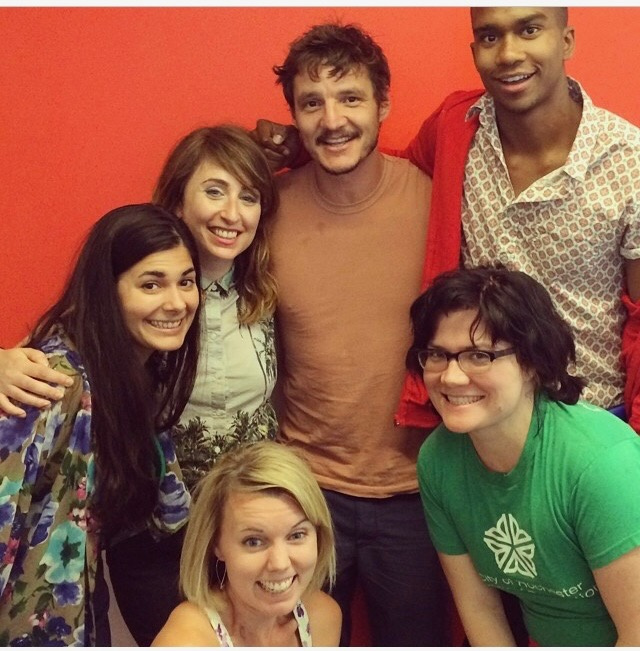
Anne Helen Petersen: He came to visit BuzzFeed when he was first emerging into more global stardom. This was when the season that he appeared on Game of Thrones. And we used to have stars come visit the office to do part of their junket rounds.
Adib Khorram: Right, and then they could answer questions while they're holding puppies.
Anne Helen Petersen: Yeah, or they could -
Adib Khorram: I miss those days.
Anne Helen Petersen: There would just be a call, like, "If you wanna get a picture with Pedro Pascal, just come to the red wall." So there's a picture of me from 2014 with newly celebritized Pedro Pascal.
I will post that.
Adib Khorram: I know, that has to be in the show notes, please ...
Anne Helen Petersen: Yes, 100%. I look very surprised. I'm like, "Here's this person that I really like on Game of Thrones," and could not have predicted that trajectory for him. But I do think that designation, the internet's boyfriend, is really interesting because boyfriend, there's a niceness to it.
Adib Khorram: There's a niceness but also, again, that availability -
Anne Helen Petersen: Yes.
Adib Khorram: - because they're not the internet's husband, and they're not someone else's husband either.
Anne Helen Petersen: Right, and you can break up with them.
Adib Khorram: Mm-hmm.
Anne Helen Petersen: And internet to me signals, like you said, that parasocial component. Absolutely. Of imagining yourself in this position.
Okay, next question. We get to talk about Heated Rivalry. This is from Kelly.
CLIP: "What do you think the Heated Rivalry stars and their characters' heartthrob status tells us about the kind of men that women desire versus the kind of men that cis het men think that women desire?"
Anne Helen Petersen: Interesting question, right?
Adib Khorram: It is.
Anne Helen Petersen: Like, who gets cast in a movie as the object of desire versus who and what type of character? 'Cause that's who people love, it's the characters, not as much the actual actors here, right?
Adib Khorram: Yeah. I think... Well, it's interesting because physically they are very similar to what men think they need to look like. Like, they are shredded and muscular. And yet they also have glowing skin, are clearly taking care of themselves. And in the show they both present, their characters act extremely hyper-masculine. And I do have lots of opinions on that. But then the actors who play them are clearly young and media savvy, know who their audience is, and I think have enough self-possession to never take themselves very seriously.
Anne Helen Petersen: Mm-hmm.
Adib Khorram: And I think a sense of humor -
Anne Helen Petersen: Playfulness.
Adib Khorram: - goes a long way in being and maintaining heartthrob status.
Anne Helen Petersen: Yes.
Adib Khorram: Because if you buy into your own hype, you stop being lovable.
Anne Helen Petersen: A heartthrob teases.
Adib Khorram: Mm-hmm.
Anne Helen Petersen: Like, flirts. They know how to play back. And sometimes I think to myself, they know what they're doing, that sort of thing, and it can be overdone. I think when the moves are too obvious, it's kind of like when someone's flirting with you too obviously, or like, where they have no game, you know? It doesn't quite work. But I think with the Heated Rivalry stars it really works.
One thing about the narrative, and I think you were kind of gesturing to this, their narrative of heated rivalry, because they are trying to pass as straight for like half of the show -
Adib Khorram: I mean, the entirety of the show they're passing for straight except behind closed doors.
Anne Helen Petersen: Except for the parts when they're having sex with one another.
Adib Khorram: I think even when they're having sex for one another, there's a portion of that where they're still performing straightness.
Anne Helen Petersen: Oh, tell me more. What do you think?
Adib Khorram: I think their initial encounters come across as not only very aggressive, but also very heteronormatively coded where one is, Ilya is always the aggressive, dominant top, and Shane is always the quiet, submissive bottom, which essentially just reproduces a sort of traditional male-female dynamic.
And as their relationship evolves, we see… well, we see more non-penetrative sex acts, and we also see more tender, simultaneous sex acts going between them in which they're both actively giving and actively receiving pleasure at the same time, and easing off the sort of dominant and submissive roles.
But I also think hockey is one of the straightest sports out there. I mean, all sports are super straight, sadly. Except for, I guess ballroom dancing maybe. Sorry, that's... I do love ballroom dancing. I do think that's Baz Luhrmann's best movie. This is the ballroom dancing one.
Anne Helen Petersen: Strictly Ballroom.
Adib Khorram: Yeah. I know, right? God, it's such a good movie. There are queer people everywhere, but hockey in particular, I think is a sport that really embraces whiteness and straightness, and a sort of violent masculinity, even though they're not allowed to fight anymore, which used to be the only good part of watching a hockey game anyway, is the fights.
Anne Helen Petersen: Do you think that there is a conscious almost regulation of the sex scenes in order to invite more straight viewers into the show? This is kind of a digression, but I also think it's interesting.
Adib Khorram: Actually, I know they worked with an intimacy coordinator.
Anne Helen Petersen: Yeah.
Adib Khorram: And I've read some of the interviews of that, how they planned it. I actually think they went in trying to portray two people in love having a lot of sex, and discovering that they were in love along the way. And the show Heated Rivalry seems to me that it was really made with a particular vision behind the lens, and that being that the team was making the show they wanted to make, and they were gonna trust that people would like it.
So I don't think they specifically courted any specific audiences with the sex scenes. I think they tried to honestly portray the sex they were trying to portray and the role it had in that relationship.
Anne Helen Petersen: Yeah. Have you seen Off Campus?
Adib Khorram: I have not. Is that one on Amazon?
Anne Helen Petersen: Yeah. And it's about -
Adib Khorram: I don't have a subscription to that. I'm technically... well, I'm not boycotting them, but I also try not to give them money.
Anne Helen Petersen: I understand.
Adib Khorram: But also, please continue, if Amazon is where you buy my books, please continue doing that. The check clears either way. Okay. But I love it when the money comes from them to me, and not vice versa.
Anne Helen Petersen: We recently recorded a bonus episode, me, Melody, and then our other friend Margaret, about this show, which is a hockey show, and it's ostensibly very straight. But our argument was actually that the show, and especially the way that both the male and female characters were presented, that it's actually for the bisexual gaze, which I think is -
Adib Khorram: Which makes sense. It does have Matteo from The Pitt in it.
Anne Helen Petersen: Yes. I do think that's part of contemporary heartthrob-ness, right, is being available to the bisexual gaze, to all of the different gazes, G-A-Z-E, not just G-A-Y-S, although that as well.
Adib Khorram: Yes. I would agree. I do think again, it's that availability. You have to be available to everyone.
Anne Helen Petersen: Yeah. Okay, next question. Yes. Is this just because I wanna have a mention of Paul Mescal? Probably. But let's hear it. It's from Claire.
CLIP: "What happened to bad boys? I'm an older millennial, and in my youth there were always a few bad boy heartthrobs who seemed a little dangerous.
Now heartthrobs seem to be good boys. Jonathan Bailey, Paul Mescal, Connor Storrie, Hudson Williams, Glen Powell, Paul Rudd, Pedro Pascal. All good guys. I'm here for it, but I'm wondering why."
Anne Helen Petersen: Okay. Can we think of a bad boy?
Adib Khorram: I was gonna say, I have a theory of why we don't like bad boys anymore.
Anne Helen Petersen: Okay, but can you think of anyone?
Adib Khorram: Yeah, but he keeps... Like, all his movies keep bombing and no one likes him.
Anne Helen Petersen: Who is it?
Adib Khorram: Jared Leto.
Anne Helen Petersen: Oh, well he's not anymore. He's so old.
Adib Khorram: I don't know. I just know he's apparently a curse now.
Anne Helen Petersen: Yeah, he's also... I mean, my heartthrob is Jordan Catalano, not Jared Leto. Does that make sense?
Adib Khorram: Same, he was never mine. But specifically when we think of bad boys, I think the Me Too movement made us reevaluate what a bad boy is.
Anne Helen Petersen: Mm. Yeah.
Adib Khorram: And that maybe it's not simply a presentation, but in fact maybe their behaviors are harming people. I also think we don't want bad boys anymore because globally, geopolitically, bad people are running things.
And so we want to reach for goodness, and softness, and tenderness, and empathy where we can find it. Whereas, I'm not saying the '90s were great for anyone, but for many of us they were slightly less existentially dreadful, and therefore bad boys were not as, like, threatening to our lives.
Anne Helen Petersen: Yeah, and I think bad boys were a way to highlight some form of transgressiveness when something like, I don't know, any sort of sexual transgressiveness or when it comes to sexuality, gender performance, all those things were, were somewhat out of bounds. Like, if you think about the way that bad boys are often portrayed, like, they wear tighter pants almost always.
There’s a way that you could read bad boys. Yeah.
Adib Khorram: They have tattoos. But now you can have a tattoo and work just about any job. Like, it doesn't matter. Like, it's no longer a matter of no one will hire you if you have a tattoo.
Anne Helen Petersen: Yes. And I think there was also a component of working class masculinity and the fetishization of that in the 1980s and '90 that now is less vivid, and is not necessarily aligned with bad boy-ness per se.
But yeah, I think this is an interesting question. I was thinking too about how many narratives of the '80s and '90s really offer us two different visions, two different dudes, and one would be, they both would be hot in different ways, and the protagonist would have to choose between them.
And I don't think we get as much of that anymore.
Adib Khorram: Yeah, I think that makes sense. It's funny you bring up the '80s, 'cause I think of so many of them movies from the '80s that gave us heartthrobs.
Anne Helen Petersen: Yes.
Adib Khorram: Like Dirty Dancing or Footloose are about people who essentially try to break the characters free of some sort of repression.
Anne Helen Petersen: Yes.
Adib Khorram: And I do think as a society we're less repressed right now than we were in the '80s.
Anne Helen Petersen: Even as there are -
Adib Khorram: Because Ronald Reagan's gone, thank goodness.
Anne Helen Petersen: - sources that are trying to repress us, I do think we're less repressed.
Adib Khorram: Yeah.
Anne Helen Petersen: but James Spader to me, not a heartthrob. He's a sex symbol.
Adib Khorram: Mm. Interesting. Okay.
Anne Helen Petersen: Yeah.
Adib Khorram: I think that makes sense.
Anne Helen Petersen: Is, what's his name, Melody, from Wuthering Heights?
Melody Rowell: Jacob Elordi.
Adib Khorram: Kate Bush? Oh, sorry. [Laughter]
Anne Helen Petersen: Is Jacob Elordi a bad boy?
Adib Khorram: I think he plays one, but in his public persona is not.
Anne Helen Petersen: Mm.
Adib Khorram: Like, he plays himself very nice and very Australian, and everyone thinks that everyone from Australia is a lad.
Anne Helen Petersen: I buy it. Okay. This is good.
Adib Khorram: Also, he's tall, and that's a whole separate category.
Anne Helen Petersen: Say more.
Adib Khorram: For instance, Adam Driver, I don't think I've ever heard anyone say that he's a heartthrob. But there is an entire subgroup of people that are like, "He is over 6'5 and that is all I need to know about him," and I think Jacob Elordi is also in that category.
Anne Helen Petersen: You know, I do think that, yeah, heartthrobs can't be super tall. I think a short king is great heartthrob material.
Adib Khorram: Interesting.
Anne Helen Petersen: Yeah.
Adib Khorram: I think there is a limit to it.
Anne Helen Petersen: Yeah, there is a limit, but sometimes when you have something that is somehow seen as less societally desirable, then you have to be nicer. It forces you to be a better dude.
Adib Khorram: Interesting. Fascinating. And, or you have to be funny. Yeah. Here's a question for you. Oh. Jack Black, heartthrob or not?
Anne Helen Petersen: Ohhh, I actually think yes.
Adib Khorram: Okay. I think he's definitely a sex symbol.
I don't know if I would... I think he's a heartthrob, but I also don't know if anyone else... that's why I asked it. I don't know people's thinkin'.
Anne Helen Petersen: We'll have to - this is a great one for people to weigh in in the comments whether they think Jack Black…
Adib Khorram: Yeah. Is Jack Black a heartthrob, a sex symbol, both or neither?
Anne Helen Petersen: Yes. Okay. All of this is good.
Adib Khorram: The sense of humor is great.
Anne Helen Petersen: Sense of humor, and for me, I've heard him in lots of interviews where he basically acts like his character from The Holiday.
Adib Khorram: Mm-hmm, which is, I think, everyone's favorite Jack Black movie also.
Anne Helen Petersen: And I'm like, "What a guy," right? You're like, "Jude Law, so handsome, don't need it. I'd go with Jack Black."
Adib Khorram: Same.
Anne Helen Petersen: Yeah. Okay, next question. This has all been leading up to this. This is from Connor.
Connor: "Maybe it says something about the side of the internet I'm on, but I've noticed something that many male heartthrobs, whether from the Golden Age of Hollywood or current day, have in common is speculation surrounding their sexualities.
I grew up hearing about James Dean's potential bisexuality, the queer subtext in movies like Top Gun, and today I regularly see people looking for clues about the potential queerness of their favorite K-pop star or the new breakout Heated Rivalry stars, Connor Storrie and Hudson Williams. Why is this? Does a heartthrob's potential queerness make them seem more accessible to us?
Does it imply a rejection of the patriarchy or other power dynamics that inherently come with celebrity that's attractive to us? And does our view of these heartthrobs change if they actually come out?"
Anne Helen Petersen: I have a theory here.
Adib Khorram: Okay. I also have... I wanna hear yours first, though.
Anne Helen Petersen: Okay. My theory is that we are not trained to know what to do with any sort of gender play or any sort of, like, soft masculinity. And so the automatic reaction is like, "Are they gay?"
Adib Khorram: Mm-hmm.
Anne Helen Petersen: And sometimes yes, and sometimes no. But I think that that is the first kind of, how do we figure out who this person really... Like, what's going on with this person? Why do I like them if they don't completely match with societal standards?
And the most obvious line of questioning is like, "Are they gay?" That's part of my theory. What is yours?
Adib Khorram: I agree, and I think that lets us vicariously break beyond the gender binary that many of us are kind of enforced in. I also think one reason that heartthrobs are heartthrobs is their presentation of non-threatening masculinity.
Anne Helen Petersen: Yeah. Yep, yep, yep. Boyfriend, not husband.
Adib Khorram: Yep. But heartthrobs are almost always people that project an aura of safety that they are not going to physically or emotionally harm the people in their lives. That's how they project. And I think that's why we feel so terribly betrayed if some of them do eventually get exposed as being horrible people.
Anne Helen Petersen: Mm.
Adib Khorram: Like why that betrayal cuts so deeply. But I do think part of their mystique is that they're like, "Oh, he seems like he smells nice and would hold the door for me and also never gaslight me."
Anne Helen Petersen: Yeah.
Adib Khorram: Yeah. And I think especially for cisgender men, presenting any sort of non-threatening masculinity is also conflated with queerness.
Anne Helen Petersen: Mm-hmm.
Adib Khorram: I mean, Mr. Rogers was married and like a pastor, but everyone was like, "Well, he's soft-spoken and nice to children. He must be gay somehow." And maybe he was some flavor of queer. I mean, a man that pulls off a cardigan that well to me has to at least be a little bit bisexual.
But regardless, who he says he is is who he is.
Anne Helen Petersen: Yeah.
Adib Khorram: And he's not with us anymore, but how he presented himself was how he presented himself, and I feel weird about adjudicating his inner life for him.
Anne Helen Petersen: Yeah. Right.
Adib Khorram: But like, he was not threatening, and therefore that he must be queer because threat is so intertwined with ideas of traditional masculinity.
Anne Helen Petersen: There's two things I wanna pick up on here, one to be a total star theory nerd, is that I think a heartthrob's image must be what's called polysemic which just means it has poly, many, semiology, many meanings. Right? You can read it in many ways, so at least open to that because that means that this person then becomes available for the desires of many different people.
Like they can map them, whether they're queer, straight desires, or just like you want them to be the specific type of boyfriend that you need, that's what they can be. The other is that we were talking about before about how it's hard for a musician to become a heartthrob because there's no true self behind the celebrity that we're trying to discover.
Like part of our fascination with movie stars in particular is always trying to figure out like the authentic self, right? Like the layers. Okay, if we peel away all of these layers, we can somehow know who the real person is, and oftentimes scandal occurs, like the biggest scandals occur when something is revealed that challenges what we believed that most authentic self to be.
So like I think about Kevin Spacey, when people are like, "Well, he's gay," which was not a surprise. Like that was something that was rumored about him for a long time, but like, "Oh, he's a horrible, abusive asshole," right? Like again, not the massive, massive scandal that it would've been if it was, say, Tom Hanks, right?
Because the characters that Kevin Spacey had played, the various appearances that he had made to the press, he had never tried to become a heartthrob. There was never this understanding that he was a nice guy. Whereas a heartthrob, there is this implicit understanding, and also a potential for scandal if it's revealed that they're actually not that way.
Adib Khorram: Mm. Speaking of Kevin Spacey also makes me think of Brendan Fraser -
Anne Helen Petersen: Ohhh.
Adib Khorram: - who I think was a heartthrob, and went away for a while, and actually has found a second heartthrob-ness.
Anne Helen Petersen: This is my point about comebacks. Right? There's a softness, there's a vulnerability when someone has been excised from Hollywood.
Adib Khorram: Mm-hmm. Yeah.
Anne Helen Petersen: Do you think that someone -
Adib Khorram: We love second chances.
Anne Helen Petersen: Heath Ledger is kind of cemented in heartthrob space somewhere?
Adib Khorram: Yeah, 'cause he'll never get any older.
Anne Helen Petersen: Right?
Adib Khorram: He will always be a heartthrob.
Anne Helen Petersen: James Dean, same thing.
Adib Khorram: Mm-hmm.
Anne Helen Petersen: Fascinating. Okay, next question comes from Nia and gives us a chance to talk about age.
Nia: Heartthrobs are almost always the same age, 21-ish to 32-ish, when they emerge, but we as consumers keep getting older. Does that impact who we consider a heartthrob, i.e. Robert Irwin is only 22, and therefore a baby, versus Jacob Elordi is 28 and can be hot? And how have Hudson and Connor managed to avoid that problem despite being pretty young?
Anne Helen Petersen: We have to also add that Pedro Pascal, who we talked about a little bit, is 51, hot. And also, we were just saying that Brendan Fraser has reentered into heartthrob status, so you can reenter into this point. Or, like, John Travolta in the '90s. Where do you go here?
Adib Khorram: I think it really is relative ages.
Anne Helen Petersen: Hmm.
Adib Khorram: And they're not gonna be heartthrobs to everyone. Like, someone could be a, like a child to me as a 42-year-old man, and a heartthrob to someone who's 10 years or 20 years younger than me.
Anne Helen Petersen: Yeah.
Adib Khorram: For me, Robert Irwin, not a heartthrob. Talented dancer, clearly goes to the gym, good for him. Not a heartthrob. Jacob Elordi also, too tall, not a heartthrob. But Pedro Pascal, I'm like, yeah. Like, I bet he smells nice.
Anne Helen Petersen: There's an interesting thing that happens for me where if the character that they play brings me back to a 20-something version of myself.
Adib Khorram: Mm.
Anne Helen Petersen: Then it smooths that otherwise ick, right? So this is why Paul Mescal just absolutely fucking does it for me, is because -
Adib Khorram: Oh, and those little shorts he wears sometimes.
Anne Helen Petersen: I would just see how many episodes of this podcast where I could talk about his meaty clackers. Like, I just - but the way that I was introduced to him and the primary text of his stardom for me is Normal People, which is a heartthrob text. Like, ugh. And brings me back to the feelings of late teendom and early 20s. So my connection to him, and he has done nothing to disabuse that in his public persona, so that is how I relate to him, whereas Jacob Elordi, I'm like, I don't know. He's just dating Kylie Jenner. That isn't heartthrobby to me.
Adib Khorram: I actually think it's interesting you mention the text because I do think what texts actors pick can help guide them along the path to heartthrob because then we make those associations. I think maybe one reason you and I have no feelings at all about Jacob Elordi is probably because neither of us saw The Kissing Booth, which was a formative romantic text for many people that were teenagers during the pandemic when those movies came out on Netflix. Like, we never saw him as a romantic lead.
Anne Helen Petersen: You're right. Yes.
Adib Khorram: We know him as apparently he was an asshole in Euphoria. Or now he's dating the person that you just named that I've already forgotten, because I don't watch that show.
Anne Helen Petersen: Kendall Jenner.
Adib Khorram: There it is. Is she the one that thought Pepsi could dismantle systemic racism or was that her sister? Okay.
Anne Helen Petersen: It's true.
Adib Khorram: Good for her.
Anne Helen Petersen: And I said Kylie earlier, but it's Kendall. Kylie is dating Timothee Chalamet, who has also, I would argue, lost his heartthrob status.
Adib Khorram: Right, 'cause a lot of people know him from the ping pong movie or from Dune.
Anne Helen Petersen: Yeah.
Adib Khorram: Unless they saw whatever one it was that he was a romantic lead.
Anne Helen Petersen: Well, I think he gained it… in a really, this is pretty interesting, he gained it in Call Me By Your Name and then Little Women, like that one-two punch.
And then a little bit in Lady Bird. Like, even though he's kind of a butt in that movie, like, he's still a little heartthrobby. And then the swagger, I don't know if heartthrobs can have that much swagger. Like, the way that he has approached...
Adib Khorram: No, and he's like "Opera's trash."
Anne Helen Petersen: Right? Not a heartthrobby thing to say.
Adib Khorram: No, and to bring it around, I think, to Hudson Williams and Connor Storrie, I think, again, they're in a text that allows them to be romantic.
Anne Helen Petersen: Mm-hmm.
Adib Khorram: Yes. Not only romantic, but also horny for each other -
Anne Helen Petersen: Yes.
Adib Khorram: - in a way that we also, for a long time, haven't gotten to see male leads be horny.
Anne Helen Petersen: Yeah.
Adib Khorram: A couple years ago, there was an article that came out called “Everyone is Beautiful and No One is Horny.”
Anne Helen Petersen: 100%, yes. I'm so glad you brought it up
Adib Khorram: This show is horny. Heated Rivalry is horny, and I think they're aware of that. You know, people always say sex sells, and it does, but also, sex is an activity that many humans participate in, and acknowledging that, I think, is sort of a unifying part of their appeal that like, "Yes, we play two guys who fuck." And I think that makes them really appealing. And that they're not ashamed of it.
Anne Helen Petersen: This goes back to an old theory of mine that I wrote about a couple years ago, dividing male protagonists, male stars into ones who like women and ones who don't.
Adib Khorram: Oh.
Anne Helen Petersen: And I think a heartthrob likes women.
Adib Khorram: Mm-hmm.
Anne Helen Petersen: So to me... This was during the height of Glen Powell insurgency and I was like, "Glen Powell likes women," and you can see that in the way he looks at women on screen. And I don't just mean that he likes them as in he wants to have sex with them. Like he actually, he is not a misogynist.
Adib Khorram: Right. He sees the fullness of their humanity.
Anne Helen Petersen: Yes, and we were talking about this with Off Campus as well. Like you can see that the male protagonist in that show likes the woman that he is pursuing, and that shouldn't be a novelty, but it is.
Adib Khorram: I have, as I said, I have not watched that show, but I have friends that are watching it, and I have romance author colleagues who are watching it, and they have been really interested in like dissecting the changes made between the books -
Anne Helen Petersen: Yes.
Adib Khorram: - and the TV show. From what I can tell, the TV show makes the men much more respectful of their love interests than they are in the books themselves.
Anne Helen Petersen: And part of that I think is a change from when the first book was released in 2015 to 2026.
Adib Khorram: Oh yeah. That'll do it. Yep.
Anne Helen Petersen: Right? Like I think that part of that, and part of this too, as Melody very astutely pointed out in this bonus episode, is that more media is understanding that the romance gaze, and you know this better than anyone, the romance gaze, if you can apply that to a narrative, it turns someone into a heartthrob.
It turns them into a guy that you actually want to be with instead of just this, you know, hearkening back to an earlier point, the guy that some male executive thinks that you should like.
Adib Khorram: Mm-hmm.
Anne Helen Petersen: Hmm.
Adib Khorram: I think the act of falling in love turns people beautiful. And so when we watch stories about people falling in love, we see them as beautiful. Cause we get to share in that beauty.
Anne Helen Petersen: Yeah. I would say the other thing that turns someone beautiful is also grief or loss, mourning. And so that, for something like Leonardo DiCaprio.
Adib Khorram: Mm-hmm.
Anne Helen Petersen: The two seminal texts to his '90s stardom are Romeo and Juliet, in which, so much crying. Just beautiful crying. And then also Titanic where he just dies tragically.
Adib Khorram: Yeah, gets to die tragically, forever young and beautiful while Celine Dion sings about it.
Anne Helen Petersen: Exactly. The other thing that we should talk about in so many of these questions is the fact that most of these celebrities, and this is a reflection of Hollywood in some ways, most of the celebrities mentioned in these questions are white or light-skinned.
So where do you think race comes into play when we think about who gets to be a heartthrob?
Adib Khorram: This feels like a trap. I think, if you ask me who a heartthrob is right now, I would say Michael B. Jordan.
Anne Helen Petersen: Yeah.
Adib Khorram: I would say David Ajala. Like, I think there are... But I think, I think as you and I are both not Black, we probably have a certain wariness of being perceived as fetishizing -
Anne Helen Petersen: Mm-hmm.
Adib Khorram: Black beauty and Black men, which is something that has historically been done.
Anne Helen Petersen: Mm-hmm.
Adib Khorram: For me, I would rather err on the side of not fetishizing someone. But then that means that I don't talk about how many Black heartthrobs there are. We briefly mentioned Denzel Washington.
Anne Helen Petersen: Yeah. Well, this is a difficult question, right? Because like you said, you don't wanna venture into fetishizing territory, and I also think there's exoticism that happens here too. But there's also a long history of associating any sort of male sexuality with a very dangerous sexuality, right?
A threat to white virtue, especially white female virtue, and I think that those traditions, as much as the Republican Party would like us to believe that racism no longer exists, those traditions hold very strong. And the way that a Black star in particular has to frame their own position as a sex symbol, all of this stuff, it has to be very carefully done.
Adib Khorram: I agree
Anne Helen Petersen: Yeah.
Adib Khorram: Yeah, and I do think Western beauty standards are insidious.
Anne Helen Petersen: Mm-hmm.
Adib Khorram: And we, you know, it's called unconscious bias for a reason. It's because we're not conscious of it.
Anne Helen Petersen: Can I propose an untraditional heartthrob?
Adib Khorram: Yes.
Anne Helen Petersen: Ice-T.
Adib Khorram: Oh. Interesting.
Anne Helen Petersen: Specifically in Law & Order: SVU.
Adib Khorram: Oh, interesting, that's also who I mostly know him for, which I think is fascinating because he also did that Fuck the Cops song.
Anne Helen Petersen: Right.
Adib Khorram: I love Law & Order: SVU, and I also am aware that it's copaganda. And so I have complicated feelings about it. I also think everyone in that show is a heartthrob.
Anne Helen Petersen: That's true. Well, and I think this is also participation in melodrama.
Adib Khorram: Mm-hmm.
Anne Helen Petersen: Like, that actually is one of the ways that you…
Adib Khorram: Oh, and competency.
Anne Helen Petersen: Competency, melodrama, those position you to be available to the heartthrob gaze, I think, in a way that action movies… Although action movies are oftentimes considered, quote-unquote, "male melodramas." Like, they don't necessarily do the same work.
Adib Khorram: I would agree, and I think, in things like Law & Order: SVU, or shows like The Pitt, like, everyone on The Pitt is a heartthrob. ... even when Noah Wyle's even when Dr. Robby's being a complete asshole, and I wanna grab him by the beard and shake him, like, I still love him. He still is a heartthrob.
I think there's something about seeing people do a thing that we kind of widely perceive as a societal good that makes it very attractive. I think maybe that's why SVU works, even as we know it's copaganda, because we like to envision that the Justice Department always moves swiftly and always is correct in who, uh, was responsible for crimes, and that the people who do the crimes face justice for them, which is so far removed from reality, but that's a whole other episode.
Anne Helen Petersen: The Pitt is actually a really interesting point here because I'm thinking about Noah Wyle in ER where he was also a heartthrob, but the only male character on that show who was not a heartthrob was the Black male doctor, played by Eriq La Salle, and some of that had to -
Adib Khorram: But he's so hot. Sorry. I know. I also never watched ER. I just saw the stills in People magazine.
Anne Helen Petersen: But part of that had to do with the way that his character was framed in the show as incredibly arrogant, but then there were also ton of stories about his behavior off-camera, which was not heart... Like, he was kinda known, and I don't know whether this was the case or whether this was just part of PR to make people dislike him, known as an asshole on set.
But there was critique, I think, in the last two seasons about lack of Black representation in the show, in The Pitt just generally, and I think we're teeing up for a season three where the character that I love, who is also on Shrinking, a Black male doctor -
Adib Khorram: And Abbott Elementary.
Anne Helen Petersen: - yes, and Abbott Elementary. We're teeing up, I think he's gonna be one of our doctor heartthrobs in season three.
Adib Khorram: I hope so. He's beautiful. He should be in everything.
Anne Helen Petersen: Likable too, right?
Adib Khorram: Mm-hmm. Yeah.
Anne Helen Petersen: Love it. And his character in Shrinking too represents that sort of soft masculinity of, like, "I was a vet, but I'm like, I'm trying to be better. I'm a good secondary father figure to this daughter." Like, everyone on that show is a heartthrob too.
Adib Khorram: I mean, Harrison Ford, sex symbol.
Anne Helen Petersen: Oh. The most heartthrobby performance though, I think, is in this movie. It's the softest he's ever been.
Adib Khorram: Mm-hmm.
Anne Helen Petersen: Okay, we get to talk about slutty little glasses last.
This is a fun question about fashion to wrap this all up. Here's Casey.
CLIP: Can you talk about the discourse around the slutty little glasses phenomenon? Full credit to Blakely Thornton here for coining the term that's completely captured the zeitgeist. I feel like most of the men I consider heartthrobs in 2026 are just extremely good at accessorizing and fashion, or at least they find great stylists and let them do their thing. The whole SLG trend seems to fall under that umbrella.
It feels like a reaction against the early aughts demonization of the, quote-unquote, "metrosexual," but maybe there's more to the idea that a modern heartthrob is allowed to be well-dressed or know how to work his angles, that a heartthrob no longer needs to code himself as a manly man who hates palazzo pants and would never carry a bag.
There was that recent glossy spread of Pedro Pascal where he almost exclusively wore pants that Katharine Hepburn would have loved, and I just kept thinking the heartthrobs of 20 years ago could never, would never. The mold of what's acceptable just feels so much bigger now, and there's a far wider range of taste in the heartthrob mid-year.
Please discuss.
Anne Helen Petersen: Amazing question, Casey, just beautifully crafted, so highest compliments here.
Adib Khorram: It really is. To me, there is the question of the slutty little glasses is different of a more expansive sense of fashion.
Anne Helen Petersen: Mm.
Adib Khorram: I think bravery is something that we appreciate in our heartthrobs.
Anne Helen Petersen: Yep, yep, yep,
Adib Khorram: I also think, again, because heartthrobs tend to be a very - one specific body shape, that clothes tend to fit well on. We love seeing new fashion on them the same way that we love a runway model. But with the slutty little glasses in particular, I think this is part of a long trend away from demonizing nerds.
Anne Helen Petersen: Mm.
Adib Khorram: I still think most people, if, as soon as you put glasses on them, you're just like, "Nerd alert." But it's no longer a bad thing. Now it's a good thing. I think sort of the rise of the nerd has made glasses more appealing, and I feel like there's been lots of media about how the guy with the pocket protector and the glasses takes off his shirt, and it turns out he's, in fact, shredded and very good at sex, and I think that in particular is why they're slutty little glasses and not sexy little glasses.
Anne Helen Petersen: The point, though, about the playfulness and the bravery is also really interesting to me. Like, this is also Pedro Pascal appearing in shirts that are very explicitly pro-trans rights and talking about… that to me is in some ways an act of bravery. It shouldn't be, but I think that's something that makes him also attractive and heartthrobby.
Adib Khorram: Oh, absolutely.
Anne Helen Petersen: Do you think, like a manly man who hates a palazzo pant and would never carry a bag. I also just think we've been talking about this more that we do boomerang between a more feminized ideal and a more masculinized, and I think right now we are definitely in this moment of more gender play.
And are we gonna go back? Like, is there gonna be this, now we just have dudes dudes? Like, are we gonna have a replay of the three Chris's? What's gonna happen? I hope not. That's uninteresting to me.
Adib Khorram: I think unfortunately, yes. I think our sociologists and pop culture people who study culture know that we always live on a 10, 20, and 30-year nostalgia cycle simultaneously. Even as Pedro Pascal is wearing a skirt Tom Holland, who is, like, a former West End dancer -
Anne Helen Petersen: Yeah.
Adib Khorram: - also does a photo shoot where he's wearing a dirty tank top and acting like a blacksmith. So I think these are always existing simultaneously, and they speak to different needs in different people and different hopes and desires.
Anne Helen Petersen: I think that is a fantastic place to end it. Before we end I wanna hear about your most recent books and what we have to look forward to.
Adib Khorram: Oh, goodness. My most recent books. Well, my most recent young adult novel came out back in March. It's called One Word, Six Letters. It's sort of inspired by the time that I was called a faggot during a school visit, and it asks questions about accountability and restorative justice and queerness and body dysmorphia in teen boys.
And that makes it sound really heavy, but it's also, I think, very funny, and if you're from Kansas City, you'll definitely be like, "Oh, I know that place." And then my next adult romance novel comes out in September. It's called Isn't He Romantic? It's also set in Kansas City and is a fake dating story about a sort of high-strung event production professional who is the slut of his friend group, named Arya, being dragged kicking and screaming into accidentally falling in love with a hot cellist who wears slutty little glasses named Ben.
Anne Helen Petersen: All of the themes.
Adib Khorram: And they also drink lots of wine and bone a lot. It's great.
Anne Helen Petersen: First of all, fake dating, love fake dating. Known fake dating aficionado here. And we love non-coastal representation here on Culture Study, so very excited for this. And where can people find you on the internet if they wanna hear more from you?
Adib Khorram: I'm on adibkhorram.com. I'm on Bluesky and Instagram @adibkhorram, A-D-I-B K-H-O-R-R-A-M, and I have a Patreon for my adult romances at Chateau Adib.
Anne Helen Petersen: Thank you so much for joining me. This has been everything that I could have imagined and more, so...
Adib Khorram: Thank you. I had so much fun. Thank you.