
I LOVE IRISH LITERATURE. And like so many of you, I love the work of Maggie O'Farrell – so when I heard her new book was very Irish (set in the aftermath of The Great Hunger in the late 19th century) I wondered if she'd be willing to come on the pod to do one of our favorite things here on Culture Study: offer very specific book recommendations. Stay tuned for a delightful conversation that will add a solid half dozen books to your TBR list.
THE NEXUS OF LLMS/A.I. AND CREATIVITY: A.I. Boosters argues that LLMS can free us for more creative endeavors — or "facilitate" our creative work. THOUGHTS???? (This one's with the brilliant Vauhini Vara, whose work grapples with these questions in a way I've never seen before). Hopefully this week's piece on how A.I. keeps wasting my G-D time will spark some questions on your end.
WOMEN'S FITNESS INDUSTRIAL COMPLEX. As our co-host Zoe Rom puts it: "Women are told they need to do fasting, creatine, lifting, fueling, and recovery differently than men. Sometimes the science backs it. More often the "different" is a marketing mechanism: invent a gendered problem, sell a gendered protocol, collect the markup." What's going on here? Where have you seen it, what pisses you off about it... take this wherever you'd like.
HOW HAVING A FAMILY BECAME SO DAUNTING (and DIFFICULT). Anna Louie Sussman is coming on the pod to talk about her incredible new book on the feeling of "impossibility" when it comes to contemporary family. We can talk about fertility, cost, equal partnership, affordability, safety, climate grief, so many things.
Anything you need advice for/want musings about for the AAA segment. You can ask about anything — it’s literally the name of the segment.
Anne Helen Petersen: This is the Culture Study podcast, and I'm Anne Helen Petersen.
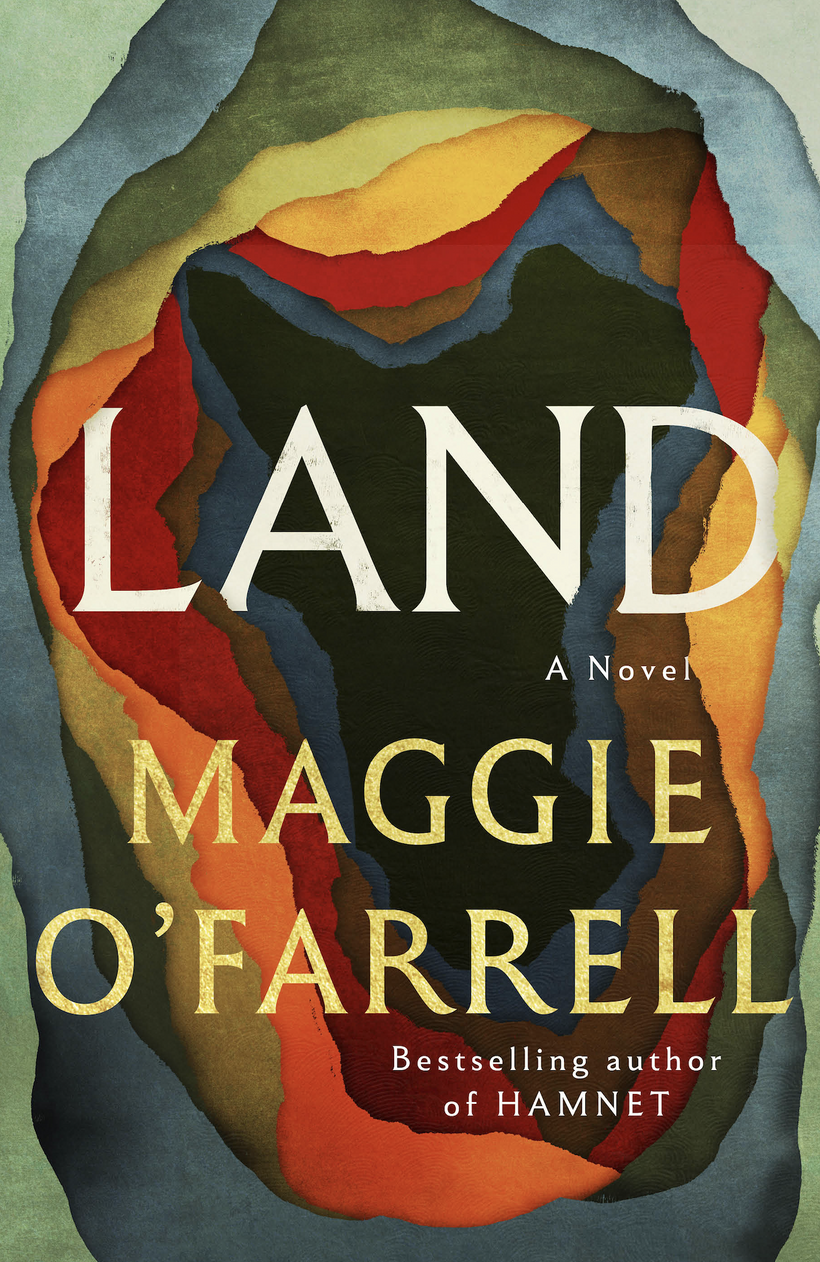
Maggie O'Farrell: I'm Maggie O'Farrell and I'm very happy to be here. I'm the author of several books, including Hamnet, and my new book is called Land.
Anne Helen Petersen: Maggie, you have so many fans in our larger Culture Study newsletter podcast universe. So before we talk about your new book, I have to ask what has it been like to watch Hamnet become what it has become?
And I know you were a co-producer, co-writer on the script.
Maggie O'Farrell: Yeah ...
Anne Helen Petersen: It's one of my favorite movies of the last year. And not just because Paul Mescal is my boyfriend. And I love his large thighs so much. But yeah, you're gearing up to release this new book, but also going through award season.
What has this been like?
Maggie O'Farrell: Well, thighs aside, no, it's been extremely surreal and really wonderful. You know, it's not something that I ever, ever expected would happen to me. I certainly had no thought at all that I would be invited to the Oscars. That I would have to go shopping for a frock.
So no, it was all extremely surprising. Every step on the way, right from when Chloe Zhao asked me to write the screenplay with her, every single step was a surprise. So, it's been a wild ride, and it's been so fun to dip my toe into that world, and just to see it all up close has been so interesting.
But just to give you some idea of how weird it was, I'm just gonna say this sentence. It's a very weird sentence. I was queuing for a limousine at the Oscars, as you do. [Laughter] I'm just gonna say it, and I was standing talking to my friend who's with me, and I thought to myself, "That's really weird. That man behind me sounds exactly like George Clooney. That's so weird." And then I thought I turned around, and I thought, "That's because it is George Clooney."
Anne Helen Petersen: Oh, my God.
Maggie O'Farrell: But, you know, as a kind of civilian, it took me a really long time to kind of catch up with that, and I thought, "God, he sounds so like him. It's really uncanny." And then I thought, "Well, yeah, of course it's him."
Anne Helen Petersen: He strikes me as one of those people that is absolutely as handsome and stunning, just like movie star handsome in person.
Maggie O'Farrell: Yeah, I think he is actually. There are some people that you see them off-screen, you think, "Ooh, they look a bit funny."
But no, I can report safely from the front lines of the Oscars that he is actually as handsome in real life as he is. I can also tell you safely that Chase Infiniti is literally the most beautiful human being I've ever seen in my life.
Anne Helen Petersen: Oh, my gosh.
Maggie O'Farrell: She's extraordinary.
Anne Helen Petersen: Just gorgeous, so gorgeous.
Maggie O'Farrell: She glows. There's something, I think she has an inner light bulb 'cause she kind of glows. She's amazing.
Anne Helen Petersen: I think it's youth.
Maggie O'Farrell: And she told me she liked my hair, which I was so startled. I was kind of, "Oh, thanks. Thanks very much."
Anne Helen Petersen: So one of the reasons when I heard that Chloe Zhao was attached to the film, automatically, I knew that it was in good hands.
The Rider, her movie from 2017, is one of my favorite movies of the last decade.
Maggie O'Farrell: Amazing. Amazing film.
Anne Helen Petersen: Yeah. Like, she just has such a sense of place that works Like, it's just an incredible deft touch with it. And I was thinking about this as I've been reading your new book -
Maggie O'Farrell: Mm-hmm ...
Anne Helen Petersen: - which to me, is so, so deep in a sense of place, and it's about place, it's about mapping, it's about all of these things.
So can you talk a little bit about the new book, which will have come out the day before this podcast comes out?
Maggie O'Farrell: With Land, I was setting out, I think, to do two things. Firstly, I wanted it to be a story about a family who is trying to, or endeavoring to survive and thrive in the long shadow of the Great Hunger in Ireland in the middle of the 19th century.
But I also wanted it to be ... I wanted to write the story, the entire story of a country, the entire history of a country via one plot of land, and all the different people who in waves come to live on that land.
Anne Helen Petersen: My sense from reading the acknowledgments is that some of the story, are some of the stories that are passed down, you think, I think your great-great-grandfather -
Maggie O'Farrell: Hmm.
Anne Helen Petersen: - like, is some of that family lineage interwoven into this?
Maggie O'Farrell: Yeah, so I'm very interested in this novel in the idea of myth and what makes up myth. So our family has a myth, or had a myth, that -
Anne Helen Petersen: Oh, wow
Maggie O'Farrell: - my great-great-grandfather worked on the very early maps of Ireland, and I had always known this, but I'd never really found out how much of it was true.
You know, I think all myth, folklore myth, all has a grain, at least a grain of truth in it. So I went to find out whether or not this was true. So I had searched through many, many archives of the British Ordnance Survey, which are on Ireland, which are based in Dublin, and I did find that actually, yes, it was true, and that he'd started working for the British Ordnance Survey in 1848. And if anyone knows a lot about Irish history, they will know that that was two years into the Great Famine. And so that date just stopped me in my tracks, 'cause I couldn't for the life of me imagine what that must have been like. So they were revising the maps because of this huge cataclysm that had hit the country, both natural disaster, political, social disaster, and, the whole - the population had completely, so many people had died.
So many people had been forced to leave. The physical and human geography of Ireland had completely changed because of this disaster. I was just trying to imagine what it was like redrawing the maps, doing those revisions to the maps, what that must have been for somebody who lived through that.
So that was kind of the spark for the novel. I mean, it is a novel. I've used what little I can find out really about my great-great-grandfather and his son, my great-grandfather, as the kind of starting point for the book. And his son, my great-grandfather, had had a very interesting trajectory in that he became a Jesuit, which isn't something that you just fall into.
You know, it's something that you have to dedicate your life to, and it's many, many years of training. And then we know that he left being a Jesuit, and he came full circle and became a mapper like his father, and that's always really fascinated me. Why would someone do that? It's such a thing to become a Jesuit, and in Ireland, it's such a huge thing to leave the church.
Anne Helen Petersen: Right.
Maggie O'Farrell: So yeah, that really fascinated me. So on those kind of very bare bones of a narrative, I built the novel.
Anne Helen Petersen: I also think that the Great Hunger is something that, at least for American audiences, we all, like, know about it, and oftentimes if your family has some Irish heritage, you know that that's part of why they left Ireland for the United States or for Canada, but don't know the textures of it. And reading the book, you get such a sense of the devastation, just where bodies had to accumulate, how entire swaths of cabins, places where people lived in the tenements, how they were wiped out. Like, they really did remap the landscape in a way that I hadn't considered, and it's...
Like, that's part of what grips you, I think, in the novel, is this new texture to the information, to this history.
Maggie O'Farrell: Hmm. I mean, the statistics alone, bold though they are, speak volumes. So between the years of 1846 and 1852, they think it's a conservative estimate to say that a million people died.
And a further million people were evicted and emigrated, mostly, quite a lot of them to Canada and the United States, as you say. I mean, there are some historians that say it's far, far larger than that. It's quite difficult to know. But those numbers alone are so bold, but that's exactly, that's roughly what happened.
But I think what interested me in the novel is that, see, the people who survived and stayed…
Anne Helen Petersen: Mm-hmm.
Maggie O'Farrell: I was trying to imagine what life was like in those years afterwards, directly in those years afterwards, how these people, who were devastated and traumatized and had lost most of their families in a lot of cases, what they did, how they continued to live, how they picked themselves up and carried on, and I think that was the major theme for me for in writing the book.
And I wanted also to write about the children.
Anne Helen Petersen: Mm-hmm.
Maggie O'Farrell: So the workhouses were set up, and it was a rule that you had to give up your land in order to go into the poorhouse, the workhouse, to get so-called relief. And also, you were separated, so children were separated from parents and vice versa.
And often the records that were kept were not very accurate, so there was a whole generation of children who had no real idea where they were from and who they belonged to. They were completely dispossessed. So their homes no longer existed, 'cause they'd probably been evicted, and they didn't really - some of them didn't know who their parents were.
And there was one story that really haunted me, was that a little girl who went in, and it was, she was from Killari. And the wardens of the poorhouse put her down as from Killani. And so her father, who'd emigrated to America, came back to Ireland, and he knew that his family had died, and he knew that there was one child who remained, and he went to the poorhouse and he said, "I'm here for my daughter who's from Killari."
And because they had made an administrative error, they said, "No, she's not here." So he went back to the States, and without her.
Anne Helen Petersen: I just read the part of the book where you slightly alter that story -
Maggie O'Farrell: Yes.
Anne Helen Petersen: - to have it to do with the girl's name. And what devastation.
Maggie O'Farrell: I know. It's awful. Even thinking about it now, it gives me a kind of horrible, horrible shiver down my spine.
Anne Helen Petersen: Yeah.
Maggie O'Farrell: That poor child, that poor father, and it's just so awful. You know, this kind of huge, in the cauldron of North America, you would never be able to find him again.
Anne Helen Petersen: Yeah. We did an episode last year with Carolina Donahue that was about, like, the Irishification of pop culture. And just talking about why there is so much Irish pop culture that seeps into the global atmosphere.
Like, why basically Ireland punches way, way, way above its weight, for a country of its size, and I highly recommend that episode for anyone.
Maggie O'Farrell: I'm listening. It sounds amazing.
Anne Helen Petersen: Yeah, and she's so funny.
Maggie O'Farrell: Mm.
Anne Helen Petersen: But we wanted to have you on to talk about something that I think our readers, our listeners absolutely love, Irish lit.
I love Irish lit. I especially love Irish cinema. I have a PhD in media studies and took a bunch of Irish lit and film classes.
Maggie O'Farrell: Hmm.
Anne Helen Petersen: But I also think that my exposure is still very much filtered through the like, oh, well this was nominated for the Booker, and then… so this is what I'm reading.
So we wanted to have someone who just much more panoramic knowledge, exposure, loves, within Irish lit as a whole. So we have a bunch of questions from readers who say some of the pieces that they love, some of the types of work that they love, Irish and otherwise, and then we're gonna come up with suggestions for them.
Maggie O'Farrell: Okay ...
Anne Helen Petersen: Does that sound good? Okay.
Maggie O'Farrell: Sounds great. Sounds like a kind of game show. I like it. Spin the wheel.
Anne Helen Petersen: Oh, and also paid subscribers will get links to everything we recommend in the show notes. Okay, let's start with this question from Jacqueline.
Jacqueline: “I am the Irish fiction super fan of my book club, and was so excited to hear you were planning this episode.
I have especially loved slow, beautiful, literary fiction reads that are evocative of a specific time and place in history, like Trespasses by Louise Kennedy, These Days by Lucy Caldwell, and of course anything by Claire Keegan. What else in this genre can you recommend? I also adored the funny and heartfelt memoir, Did You Hear Mammy Died by Seamus O'Reilly, and overall, I feel like there is so much amazing art and writing being created right now by people who came of age at the end of the Troubles. What else am I missing?"
Maggie O'Farrell: Well, I've got to commend her on her taste. That's amazing. What a brilliant list. I would prescribe for her Donal Ryan, who I really love. He's a writer from Limerick, and I think one of his, I think his earliest book is called The Spinning Heart. I think that was his first book.
And it's an incredible, brilliant evocation of modern Ireland seen through a small community, and if you like it, which I know that you will, there are lots... He's written several other books, all of which are slightly interlinked. They're not really sequels, but they are about the same community, and you see the same characters pop up, and you find a little bit what happens to them.
So his writing's so beautiful and deeply, deeply satisfying, and I think that'll be, I think that's a perfect fit for you. I would also say you should try John McGahern. He's passed on now, but he wrote an amazing novel called Amongst Women. I think that's his most brilliant book.
Anne Helen Petersen: What is it about?
Maggie O'Farrell: It's about a family, and in particular, a really- terrifying father who kind of has a hold over his children, and some of them kind of succumb to his charms and stay in his orbit, and others have to wrest themselves free. He's a very, very chilling anti-hero, and it's an incredible book.
Anne Helen Petersen: The other one that I would suggest is Niall Williams' This Is Happiness, which is about a very small community in 1958 as electrification is coming, and I think sometimes people forget that electrification did not come everywhere in the world in, I don't know, sometime in the 1920s or something. Like, there's a very long spread. It's still, there's still not electrification in many places, but 1958, a really fascinating sort of hinge point in terms of coming into modernity, that sort of thing.
And Williams just writes about the land with an incredible evocativeness that I always appreciate, and it's like, it makes you feel very happy without being saccharine in any way. I think that that's how I would describe it.
Maggie O'Farrell: Yeah, that's a nice one.
Anne Helen Petersen: Yeah. Okay, next question comes from Allison, and Melody's gonna read it.
Melody Rowell: "Looking for fiction similar to Ann Cleeves and Tana French: well-written, compelling stories, complex characters, strong sense of place. Bonus points for good audiobooks. Doesn't have to be mystery or crime fiction or a series, but the kind of book that you just have to stay up late or call in sick to finish. Clear would be an example that isn't genre fiction."
Anne Helen Petersen: Hmm. Okay. Ideas?
Maggie O'Farrell: I loved Clear. I thought it was a great book. Yeah, I would say it's not exactly a mystery, but it's a kind of like a literary puzzle in a way. And it's Haven by Emma Donoghue, which is -
Anne Helen Petersen: Oh, yes.
Maggie O'Farrell: Yeah. I love this book, and I mean, I love Emma Donoghue.
I would read a shopping list if she was going to publish one. But this is about three religious people who are going, they travel out, in a kind of terrifyingly small boat, into the sea to set up a religious community on a very remote island, and I loved it because it really surprised me two or three times.
I love books that there is a massive right angle, and I didn't see it coming, and this book does that. And I don't, without giving too much away, there is a really interesting mystery at the heart of it.
Anne Helen Petersen: So I'm glad you brought up Emma Donoghue because my recommendation here was going to be The Wonder by her.
Maggie O'Farrell: Oh, that's interesting. Yes, that's true.
Anne Helen Petersen: Which is about, how do I describe this? Basically in, it's like 1850s small town and an English nurse -
Maggie O'Farrell: Post-famine ...
Anne Helen Petersen: Yes, post-famine, and an English nurse. Yeah, so there's all of the discourses about the famine and hunger and, and how we control or can't control hunger going on in there.
But it's an English nurse comes to watch over this 11-year-old girl who stopped eating on her 11th birthday four months before, and you watch as the nurse has to be, believes that the family is conspiring to try to make this, to make a, I don't know, like a miracle essentially.
But then how do you, how do you say that? Do you believe the 11-year-old? Do you believe, is she actually existing on manna from heaven? She also seems very important as in terms of a figure in the community. Like, her surviving seems very important. So yeah, so just Emma Donoghue also for people who might, like, be like, "Oh, that name's so familiar," she wrote Room.
And I think is just particularly skilled at crafting these sorts of compulsive and unlocked - like the narrative unlocks slowly for you, I guess, is how to say it.
Maggie O'Farrell: Yeah. And she loves to pull the rug out from under your feet, I think, in a very, very subtle, fine way.
Anne Helen Petersen: Yes! Yes. Do you have any other ones there? You don't have to. It's okay. We have so many questions.
Maggie O'Farrell: What else did I have? God, so I actually had The Wonder on a bit later.
Anne Helen Petersen: You can suggest that one for later too. We can have it come up in many places.
Maggie O'Farrell: Yeah. No, I think that was my only mystery one, I think.
Anne Helen Petersen: Okay. All right, next question is from Amy.
Amy: I am looking for any sort of family drama in the vein of Instructions for a Heat Wave or This Must Be The Place. I love anything with a large cast of characters, and lots of people making lots of choices, and dealing with the fallout of those choices. I definitely would prefer it to be a little less bleak than The Bee Sting, though.
Anne Helen Petersen: Okay, Irish family dramas that aren't too bleak. I mean, I feel like mine are all bleak ...
Maggie O'Farrell: How long have you got? How long have you got, really? I mean, there's so many amazing... You know, there, a lot of novels are about family, 'cause I think family is a very important thing in Irish culture. I think one of my recent discoveries, and a real favorite of mine, is a debut novel by Seán Farrell, no relation.
And it's called Frogs For Watchdogs, and it's mainly set from a child's point of view, and he is living in a slightly sort of rackety lifestyle because his parents have separated, and he's living with his mom on a farm. And it's about the very, very slow building of a relationship between him and his mother's new boyfriend.
Anne Helen Petersen: Oh.
Maggie O'Farrell: And there were certain - it's a very, very moving book, and there were several times when I was a bit worried about this new man coming into the household, and I thought, "Where, I don't know if, where's this novel going?" But it's nothing like that, thank goodness, 'cause I would find that a bit disturbing.
But it's a very - it's a really beautiful book about the kind of making of a unusual family.
Anne Helen Petersen: Why do you think that family is so central to Irish literature? Like, I think there are a lot of different places that have family as a centerpiece, a narrative centerpiece, but say, British lit, I don't think so.
I don't think the family is central. But yeah, what do you think?
Maggie O'Farrell: I mean, families are a ready-made plot really, aren't they? I think for any novelist, if you have a family of five, like the one, say, I grew up in, my own, you know, family now, you've got, I think is it 25 different relationships?
My maths is terrible at this kind of thing, but so all you need to do is just kind of put five characters in a room and set them going, you know. So I think it is, but I think families tend to be large in Ireland, and there's quite a lot of literature which is about ownership and land and the farm, who inherits and all that.
I mean, it's just a very, it's a very, very potent narrative, I think. I mean, but there are so many. Yeah, I think for families, Anne Enright is absolutely brilliant at writing families. Oh,
Anne Helen Petersen: I was just... You’re gonna steal all my Anne Enright recommendations.
Maggie O'Farrell: Well, we can talk, and then Colm Tóibín, I mean-
Anne Helen Petersen: Yes!
Maggie O'Farrell: You know, The Blackwater Lightship. That's amazing. Oh. I mean, there's so much. There's so much.
Anne Helen Petersen: Well, and even Colm Tóibín's The Master, which is about Henry James, is about being closeted, it's about being a very famous writer, but it's also ultimately about family, and it's about his sadness that he can't be with his sister.
Like really, it's a family novel as well.
Maggie O'Farrell: Yeah. Absolutely. Another one which I really loved is called Dinner Party by Sarah Gilmartin.
Anne Helen Petersen: Oh, yeah. I've heard of this ...
Maggie O'Farrell: Which is a really fabulous book about a very, very complicated family, and lots of people arriving and leaving, and the sort of effect of different, the choices of different generations has on a kind of knock-on effect on the next generation.
It's a very, very satisfying book that you can sink yourself into.
Anne Helen Petersen: Oh, and similar to Brooklyn and the follow-up, Long Island, about what happens, those who stay and those who leave, kind of.
Maggie O'Farrell: Yeah. Exactly. Exactly.
Anne Helen Petersen: Yeah. The Anne Enright that I love is, I mean, the most famous of hers probably is The Gathering. But it's pretty bleak, I would say. And then the other one that comes to mind, actually, I haven't read it in so long, but it was one of my favorite books that I read in college, is Paddy Clarke Ha Ha Ha by Roddy Doyle.
Maggie O'Farrell: Oh, yes. A wonderful book.
Anne Helen Petersen: Wonderful book. And my memory of reading it is almost the same as when I read A Tree Grows in Brooklyn.
Like, you feel so transported into this perspective of a young child in a way that's very illuminating. I just, I really loved it.
Maggie O'Farrell: Mm. Yeah. I think that one of my favorite things about that novel, which is many things, but it's the title, 'cause when you see it, you think it's going to be humorous, and then towards the end you realize what it means, and it's so heartbreaking, which I won't say what it is, but it's like a punch in the gut when you realize what it refers to.
Anne Helen Petersen: Yeah. Okay, next question comes from Erin.
Erin: I have read Milkman by Anna Burns, Say Nothing by Patrick Radden Keefe, and two books by Flynn Berry, all of which deal with the conflict in Northern Ireland.
I would be really interested to hear about other authors whose books deal with this topic, either fiction or nonfiction.
Maggie O'Farrell: Wow. Yeah. That's a big question.
Anne Helen Petersen: Yeah, I know. Just jump right in.
Maggie O'Farrell: One of my favorite novels about the Troubles is - I think it was written in the '80s, maybe I'm wrong - is Bernard MacLaverty's Cal.
Anne Helen Petersen: Oh.
Maggie O'Farrell: I think it's so - I love Bernard MacLaverty, and he writes really beautifully about the Troubles, about a young man who has been caught up in a terrible act. And he has, at the outset of the novel got away with it, but it's increasingly begins to catch up with him for reasons that I won't disclose, but there's something very, very... It's a very sort of narrow lens on the Troubles, but it gives you a really, really clear-eyed vision of what it was actually like, I think to live in Ulster during those years.
Anne Helen Petersen: Well, I always recommend people read Milkman alongside Say Nothing, or Say Nothing first and then Milkman.
Because if you don't know anything about the Troubles, which I know that's so odd for someone to come into a book without an understanding of a massive societal rupture, ongoing rupture that kept going, kept going. But I think that those two paired together are so effective because it gives you this kind of almost journalistic understanding of, like, "Oh, here, like, here's the view of what happened from this more distanced view," and then the first person omniscient ongoing narrative of Milkman. And also, Milkman is very funny -
Maggie O'Farrell: Yeah ...
Anne Helen Petersen: - in a way that obviously Say Nothing is not funny, and then you get this larger picture of humanity by pairing those two together.
Maggie O'Farrell: It's got a real pulse. The other thing I would really recommend is a collection of short stories by Liadan Ní Chuinn, which is called Every One Still Here, and it's a debut collection, and they are a very young author.
I think they were born after the Good Friday agreement. And they are the most incredible stories. I don't know, I don't know what on earth they've been eating, but it's very, very good because they are really, they kind of really, really take no prisoners. The stories are about kind of trauma and recovery and exactly...
There's a long list. The last story details the actual real names and circumstances of civilians, innocent civilians who were murdered by the British Army, mostly shot in the street, and it's very unflinching, and it gives you a very amazing insight into modern Northern Ireland.
Anne Helen Petersen: Even taking short stories as the approach just seems like such a different way than we usually see it narrativized, and that sounds amazing.
Maggie O'Farrell: Yeah, I can't recommend them highly enough. They're absolute brilliant. I think they're a genius writer.
Anne Helen Petersen: Next question comes from another listener named Erin, which is fitting.
Erin: Hi, Maggie. I love your work. I've also read and loved Ordinary Saints by Niamh Ni Mhuircheartaigh, The Bee Sting by Paul Murray, and The Rachel Incident by Caroline O'Donoghue.
I like messy families, complicated relationships, and ambiguous endings. Plot is definitely secondary for me. Thanks.
Maggie O'Farrell: I'm gonna go out on a slight limb now and recommend a book which is set in ancient Greece.
Anne Helen Petersen: Ooh, yeah.
Maggie O'Farrell: But it's by an Irish writer called Ferdia Lennon, and I absolutely love this book.
It's called Glorious Exploits, and it's about two young guys in ancient Greece and in Syracuse, and it's shortly after the war, and they have, they're kind of prisoners of war all waiting in a quarry, and they decide that they're going to put on a production of Euripides, and they're going to get these prisoners to star in it.
But what's so incredible about it, and it completely works, and it makes me laugh every time, is that the two of them talk like lads from Limerick. So it's an amazing kind of, it's a weird disconnect 'cause you're in ancient Greece, and I think Ferdia Lennon, the writer, is a kind of expert in ancient Greece, so he really knows his stuff.
But they talk like lads from Limerick. So it's a brilliant disconnect, but somehow, it really works, and it's extraordinarily moving and brilliant and also very, very funny. I mean, you know, given that the subject is kind of prisoners of war and art, it's very funny but also very moving.
So I think it's so unusual but so brilliant.
Anne Helen Petersen: I love that. Mine is very different. It's The Forgotten Waltz by Anne Enright. Have you read that one?
Maggie O'Farrell: I have. Yeah, I've read everything that Anne Enright could possibly publish. I love her.
Anne Helen Petersen: That book, it's very sexy, and then it becomes very ambiguous in the way life does, not in a sexy and then tragedy.
It's more like there's an affair. This is not a spoiler. There's an affair. And then what happens when you actually get married to the person you have an affair with, essentially.
Maggie O'Farrell: Mmm. Yeah.
Anne Helen Petersen: but I just, there's a strong sense of interiority in this one, and I just thought it was very beautifully wrought.
And yeah, there's plot, like, in terms of there's an affair and there's a breakup, but it is also very much about dealing with a feeling, what is the aftermath of a feeling and when you act on it, that sort of thing.
Maggie O'Farrell: Mm-hmm.
Anne Helen Petersen: Okay. Next question. This is from Brynn
CLIP: “I'd love to have some recommendations of books translated from Gaelic or that play with language and translation.
I loved A Ghost in the Throat by Doireann Ní Ghríofa, which kind of gets at this, as does the band Kneecap. Perhaps Milkman by Anna Burns would be another way of thinking about this, or Brian Friel's play Translations."
Anne Helen Petersen: Hmm.
Maggie O'Farrell: Oh, that's a big question.
Anne Helen Petersen: I know ...
Maggie O'Farrell: I love Flann O'Brien's novel, but I think one of my favorite poets who wrote in Irish is Nuala Ní Dhomhnaill. Her poetry's been translated by Medbh McGuckian and Seamus Heaney, Paul Muldoon, and interestingly, she was born in England to Irish parents, but they spoke Irish at home. But then I think when she did, she did go and live in Ireland later in her life.
And she's written a brilliant poem called “The Language Issue,” which explains, she kind of sets out her decision not to write in English. It's really wonderful. All her work is really fascinating. She explores the kind of duality of her identity having been born in England, but Irish being her mother tongue, which I think is pretty unusual for people born in Britain.
Anne Helen Petersen: Right. Right ...
Maggie O'Farrell: Yeah, she's really wonderful.
Anne Helen Petersen: Have you noticed... So I have A Ghost in the Throat on my pile forever. I've been really wanting to read it. And there is something that people… like what do you think happens when a book is written in Irish and then translated.
Like, is there a particular alchemy that you get?
Maggie O'Farrell: I think so. I mean, I think with all translations, a huge amount depends on who's translating.
Anne Helen Petersen: Right, right.
Maggie O'Farrell: And I mean, I think a lot of writers are people who are, in a sense, have two feet in two camps, and they are observers, and maybe the kind of slippage between languages gives you that.
I don't know. I mean, it's hard to generalize, I think.
Anne Helen Petersen: Did Seamus Heaney ever write in Gaelic?
Maggie O'Farrell: Not as far as I know.
Anne Helen Petersen: I don't think so
Maggie O'Farrell: Yeah. His wife, Marie Heaney, she wrote an amazing collection of, she rewrote a lot of Irish myths, which is one of my favorite versions of Irish folklore.
Anne Helen Petersen: Oh, I love that. What's it called?
Maggie O'Farrell: Over Nine Waves. Oh, wonderful. And also The Names Upon the Harp. And she's translated all these several cycles of Irish myth and with heroes and battles and yeah, they're wonderful, really amazing. And if any of your readers ever go to Northern Ireland, please go to the Seamus Heaney Center.
It is so incredible. It's one of my favorite places, and it's a really beautiful building, and it's got ... You can see his very famous duffle coat, among other things. But one of the things that I always look at whenever I'm there is not only his fountain pen, which I love, but they have a display of the different drafts of some of his poems and his amendments and his reworkings, and that is just absolute catnip. I can't stop looking at it, and you can see the kind of mechanics of his genius.
Anne Helen Petersen: So I took my first class in Irish lit, I was a sophomore in college, and the teacher was this old - from Irish family. He was probably in his 70s, built like a boxer, just, he loved Seamus Heaney so much, and when the college arranged to have Seamus Heaney come speak, it was like the culmination of his life.
He was like, "This is -" And he was able to impart that love to me at that age. And also just all the layers that are going on in Seamus Heaney's poetry. And I did not know - I knew so little about Irish history, and I learned so much through reading Seamus Heaney in a wonderful way.
I didn't bring him up earlier 'cause sometimes I wonder if he's so overdetermined as the Irish poet that it's almost annoying. Do you feel that way or no?
Maggie O'Farrell: Oh, no. I mean, he's famous for a very good reason, because he's brilliant.
Anne Helen Petersen: Exactly... that's how I feel. I have his collection, Open Ground. Like, it's one of the few books from college that has always moved, through all of the moves with me. It still has the little thing from the college bookstore, and it has all my marginalia and everything in it. It's very precious to me.
Maggie O'Farrell: Good. Yeah. May it stay that way. Yeah, I don't think someone should be penalized for being good at their job.
Anne Helen Petersen: [Laughter] Okay, this one's from Victoria, and I can't wait for your answer on it.
Victoria: I'm in a nun/weird Catholic phase despite not being religious, and absolutely adored Ordinary Saints by Nimni Malone. Do you have any more recommendations for Irish literature that takes this topic for a contemporary spin?
Maggie O'Farrell: As it happens, I do. I would recommend Hagstone by Sinéad Gleeson which is about a young artist who travels to live in a religious community. It's an amazing novel, and again, a bit, it's quite sort of in the vein of Emma Donoghue, I would think, but it surprises you. It's not what you expect, and it certainly examines at very, very close quarters the Catholicism in modern Ireland and religious communities and so maybe that would be up your street.
Anne Helen Petersen: There is just so much to mine there. Like, and even, you know, you were referencing, was it your great-grandfather who became a Jesuit and then went back to the other? Like, so much - what are the options that are open for women to live the way that they wanna live. Like, sometimes it's like freedom and confinement almost, if that makes sense.
Maggie O'Farrell: Yeah, exactly, and I think what Gleeson does so brilliantly is lay alongside, I think that there's an awareness that the Irish paganism is one of the best preserved Celtic societies and beliefs, and you can kind of almost see them coexisting in modern Ireland and I think she addresses that issue very, very beautifully in this novel.
Anne Helen Petersen: Wonderful. Okay, for our last three questions, we're gonna turn to genre fiction. I'm so excited.
This is gonna be today's Ask Anne Anything. So if you want our recommendations for Irish mysteries, romances, and fantasies… head to patreon.com/culturestudy and sign up.